
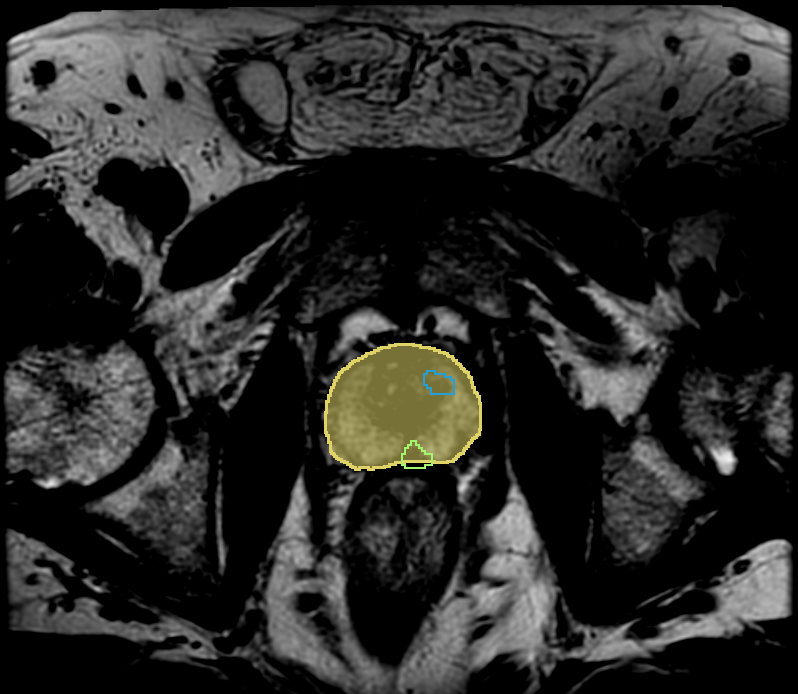
Bringing AI to the Clinic: Prostate Segmentation and Lesion Contouring with UCSD Health
At Blue Rock, we pride ourselves on turning innovative ideas into clinical reality. One of our most impactful collaborations has been with UCSD Health, where we’ve helped bridge the gap between cutting-edge AI research and the practical needs of radiologists and oncologists.
From Research to Real-World Application
UCSD had a powerful AI model capable of segmenting the prostate and identifying lesions from medical imaging. But translating that model into something usable in a clinical setting required more than just good code, it required a system that integrates seamlessly with hospital workflows and meets the rigorous demands of medical professionals.
That’s where Blue Rock came in.
We built a full-stack solution around the AI, enabling it to function within a multi-modality imaging environment. The system accepts scans from various sources, automatically processes them using the AI model, and outlines both the prostate and any lesions. But rather than stopping there, we ensured the results could be trusted and refined.
Making AI Interactive and Actionable
We developed a secure, browser-based application where radiologists and radiation oncologists can:
- Review AI-generated contours for both the prostate and lesions
- Make manual adjustments directly in the viewer
- Compare across imaging modalities
- Save and annotate findings in real-time
This interactive tool empowers physicians to retain control while benefiting from the speed and precision of AI.
Seamless Integration with Clinical Infrastructure
To support real-world deployment, we integrated the platform with a localized PACS server, allowing all imaging data to be stored, retrieved, and managed using familiar radiological systems. We also built a reporting interface so physicians can easily generate structured reports based on their review and edits of the contours.
Looking Ahead: FDA and Beyond
Our partnership with UCSD Health is just the beginning. With this technology in place and functioning in a clinical environment, we are now focused on helping shepherd the system through the regulatory approval process, starting with the FDA and expanding into Europe.
The goal? To bring this AI-assisted solution to hospitals everywhere, enhancing the accuracy and efficiency of prostate cancer diagnosis and treatment.